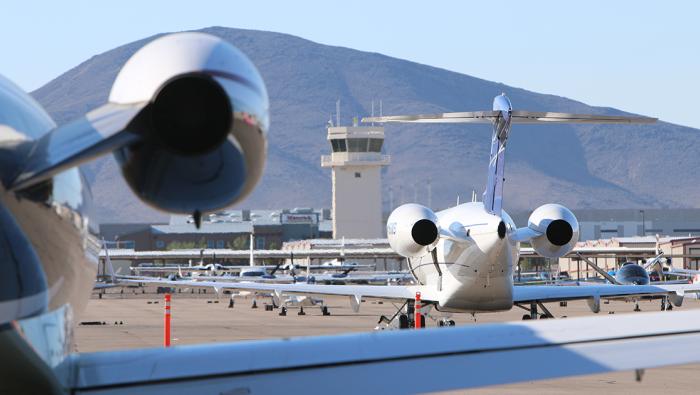
The investigation into the cause of Friday’s nationwide air traffic groundstop continues, as Congress and the public demand answers. At approximately 3:30 p.m. ET, the FAA reported a technical problem and halted departures at all airports in the U.S. This lasted until 8:15 p.m.
According to the agency, legacy equipment became unstable when data began flooding the FAA telecommunications infrastructure (FTI) network at a rate of 1,000 connection attempts every 4 to 5 seconds. This disrupted the system and created instability with aircraft communications and radar feeds. In an interview with CNBC, Transportation Secretary Sean Duffy said his team traced the problem back to a facility in El Dorado, Arkansas.
Industry flight operations clearinghouse OpsGroup is reporting that the most likely culprit appears to have been a newly installed router—part of ongoing copper-to-fiber-optic cable upgrades.
The Professional Aviation Safety Specialists (PASS) union, which represents FAA technicians that keep the ATC infrastructure running, added further analysis. “The issue was isolated to two contractor-owned and maintained routers that were being updated midday,” it explained in a statement. “Historically, contractors have followed a protocol where FAA employees conduct a risk assessment and coordinate the maintenance of the system or equipment. PASS-represented technicians were not involved in the upgrades that led to the ground stop [on Friday].”
|
IBAC is urging its affiliated national associations to lobby their governments to demand political pressure to block changes to the European Union Emissions Trading Scheme (EU-ETS). The group, which represents business aviation at ICAO, has backed the EBAA’s opposition to proposals made by the European Commission’s Climate Action directorate-general, arguing that changes would disproportionately affect the industry to the extent that some operators could find it impossible to comply with requirements.
Under proposals issued in July, introduction of a new de minimis emissions threshold of 1,000 tonnes of carbon dioxide per company annually would bring many additional smaller operators under the EU-ETS mandate. According to IBAC, some members of the European Parliament want to further lower the de minimis threshold for EU-ETS compliance to just 250 tonnes of CO2. The group said this would bring around 1,000 more operators under the requirements.
The EC also wants the scheme to apply to all flights from the European Economic Area to third-country destinations within a 5,000-kilometer (2,700-nm) radius of Frankfurt, Germany. IBAC said this will significantly increase the number of flights from outside the European Union that would be subject to requirements.
As part of its rebuttal of the proposed changes, EBAA has also protested that the EC will impose broader carbon-pricing obligations on business aviation than on airlines.
|
Preowned business aircraft values have risen to the point that some airplanes are now worth more than their owners paid for them. This inversion will not last, industry consultant Rolland Vincent told attendees today at Corporate Jet Investor (CJI) Miami 2026, and the lower end of the market is already showing signs of change.
Vincent, of Rolland Vincent Associates, joined a turboprop-focused panel alongside Olivier Knutti, founder of Swiss aircraft brokerage 88K, and Michael Ellbogen, who leads Pratt & Whitney Canada’s Eagle Service Plan (ESP) sales team. The discussion covered market conditions, buyer profiles, residual values, and engine maintenance programs.
“We’re living in the golden years of business aviation right now,” Vincent said. He noted that backlogs on certain product lines at some OEMs have stretched from two years to as many as four. Because of these backlogs and demand, Vincent said a 9- to 10-year-old PC-12 NG holds “100% residual value right now.”
Knutti described strong demand and a stabilized market, although he said aggregate figures hide a growing divergence within individual models. Young, low-time aircraft command a premium, while older models with more hours remain on the market longer. “What has changed nowadays is that the price difference between the best aircraft and an average aircraft of a certain model is larger than it was a few years ago,” he said.
|
Embraer is collaborating on an international project led by the German Aerospace Center (DLR) to research the formation of contrails and potential opportunities to reduce climate impact. The International Ground and Inflight Turbine Emission Experiment, or IGNITE-X, is using an Embraer E195-E2 as a flight-test platform to explore the role of low-sulfur fuels in contrail formation.
Contrails are ice-crystal clouds that develop when aircraft exhaust interacts with cold, humid air at cruising altitude. They are considered to be a contributor to aviation's non-CO2 climate effects. IGNITE-X is researching whether a reduction in sulfur in aviation fuels, combined with low-emission engine technology, can reduce their formation.
The trials will involve Pratt & Whitney GTF PW1900G-powered E195-E2 flights using a specially produced low-sulfur aviation fuel and a conventional jet fuel as a comparison. A DLR Dassault Falcon 20E, following the E195-E2 through dedicated test corridors over Germany, is measuring exhaust emissions and contrail properties at varying distances from the aircraft. In addition, the researchers are conducting measurements from the ground. The tests will enable researchers to compare emissions and particle formation under real-world operating conditions.
“We are measuring the emissions directly within the exhaust plume—this is both scientifically and operationally extremely challenging. The test procedure provides unique insights into the potential for reducing emissions,” said Markus Fischer, DLR divisional board member for aeronautics.
|
Sponsor Content: West Star Aviation
A 96-month inspection is one of the most extensive maintenance events your Hawker will undergo. Discover how early planning and combining inspections with avionics upgrades, interior refurbishment, or paint can help minimize downtime and maximize your investment.
|
German charter operator FAI Aviation has secured a Maltese air operator certificate and opened an office on the Mediterranean island. The approval was issued by Transport Malta on Friday, clearing the way for the company to register a Bombardier Learjet 60XR (9H-FAQ) in the country, with more of its jets to follow.
According to FAI, which specializes in air ambulance flights, having some aircraft registered in Malta will expand its operational capabilities and enhance solutions available to aircraft owners and charter clients. The company said the aircraft operator’s certificate (AOC) application process took eight months to complete.
FAI’s new office in Birkirkara is managed by Lino Xuereb, who has been appointed as director of flight operations for FAI Malta. The company said it operates the largest fleet of Bombardier aircraft in Germany—including five Learjet 60s, six Global Express jets, and five Challenger 604s.
At its headquarters in Nuremberg, the group operates an FBO/MRO facility spanning 107,000 sq ft. The center employs almost 300 people, including 80 just on the maintenance side.
“Securing our Maltese AOC is an important step for our business and its development as an international operator,” FAI chairman and founder Siegfried Axtmann said. “Malta has established itself as one of Europe’s leading aviation jurisdictions and provides an attractive environment for owners and operators.”
|
The path Future Flight Global (FFG) is taking to offer point-to-point air transportation in Florida is set to start with Pilatus PC-12s, turboprop singles that have been in production since the mid-1990s, before transitioning to electric aircraft. Having launched its per-seat scheduled flight business model last week, the self-styled “mobility management company” said it is close to signing contracts with one or more air charter operators to launch services under U.S. DOT Part 380 rules in the first quarter.
FFG co-founders Karan Singh and Toni Drummond, who have long been active in the business aviation sector, believe they will be able to offer regional air service that bypasses airline terminals at rates comparable to premium car rideshares.
Following in the footsteps of service providers such as JSX and Blade, FFG intends to leverage its alliance with FBO group Signature Aviation and vertiport developer Urban V. The PC-12 flights will operate from private terminals with eight seats for sale via its booking site or other platforms for scheduled departures.
On November 5, FFG committed to make Beta Technologies’ Alia CX300 electric airplane the next step in its service offering. A contract Singh and Beta founder Kyle Clark signed while flying the five-passenger model over Florida covers firm orders for 10 and options for 10 more.
|
Life Flight Network has ordered five Airbus H135 helicopters to fly emergency medical missions in Oregon, Washington, Idaho, and Montana. With an order for three it placed last year, the nonprofit air ambulance operator now has a total of eight H135s on order. Airbus Helicopters did not say when it expects to deliver them.
Based in Aurora, Oregon, Life Flight Network serves patients across the Pacific Northwest, Intermountain West, and Hawaii with a fleet of about 40 Bell, Leonardo, and Airbus helicopters, as well as 16 Pilatus PC-12 turboprop airplanes. In March, it ordered 12 PC-12 Pro air ambulances under a 10-year agreement, with deliveries slated to begin next year.
Life Flight Network CEO Ben Clayton said the H135’s safety features and medical capabilities make it a good fit for a service area where communities are “separated by mountain ranges, oceans, and vast rural distances.”
The H135’s high-mounted main rotor and enclosed Fenestron tail rotor make the light-twin helicopter safer for crews loading patients on the ground, according to the manufacturer. Airbus counts more than 1,500 H135-family helicopters in service and more than 8 million cumulative flight hours for the type.
|
Business aviation spends heavily on training pilots for emergencies most will never face and almost nothing on the interpersonal breakdowns that happen daily, a gap that two back-to-back general session speakers at the 30th Bombardier Safety Standdown last week framed as a safety problem rather than a soft skill.
“Aviation trains us really well for the engine fire, but nobody trains us for the human fire,” said Kyle Freiburger, a G450 pilot and founder of leadership training firm First Class Leaders. Across five type ratings and more than 20 years in airline and corporate flying, he counted roughly 600 hours in simulators and about $1 million spent training him to run the engine fire drill. His career total of engine fires and failures is zero. In contrast, he has had about four hours of crew resource management training a year, which he estimated at $500 per pilot and mostly as a slide deck describing the standard.
Tim Wade, director of environmental, health, and safety at fractional ownership provider Flexjet, opened the session an hour earlier with a complementary diagnosis: the industry’s problem is not people but their skill set. Influence, he argued, is unavoidable and does not switch off outside the hangar. “Leadership is not a light switch that can be turned on when people are watching and turned off when they are not,” Wade said.
|
AVIATION SAFETY QUESTION OF THE WEEK
Which of the following statements regarding an aircraft in a glide is correct?
- A. Weight decreases the minimum glide angle when the aircraft flies at the maximum L/D ratio.
- B. The minimum glide angle is achieved at the speed of maximum L/D ratio.
- C. Flap selection increases glide performance due to additional lift.
- D. A high glide speed close to maximum speed assures more distance covered in case of engine failure.
|
Stay Informed—Renew Your AIN Subscription
Attention Aviation International News subscribers: To ensure uninterrupted service please take a moment to renew your subscription today. If you are not a subscriber but would like to sign up, you can do so here. AIN is a monthly print and digital publication that provides in-depth features and news that cover the global business aviation industry, including aircraft manufacturing, operations, services, maintenance, technology, and the people who drive business aviation’s success.
|
RECENT ACCIDENT/INCIDENT REPORTS
November 15, 2026
San Antonio, Texas United States |
- REPORT TYPE: Preliminary
- INCIDENT TYPE: Nonfatal
- ACCIDENT REGISTRATION #: N501NY
- MAKE/MODEL: Cessna Citation I/SP
November 13, 2026
Lone Wolf, Oklahoma United States |
- REPORT TYPE: Preliminary
- INCIDENT TYPE: Nonfatal
- ACCIDENT REGISTRATION #: N408UT
- MAKE/MODEL: Bell 407
November 13, 2026
Horseshoe Bay, Texas United States |
- REPORT TYPE: Preliminary
- INCIDENT TYPE: Incident
- ACCIDENT REGISTRATION #: N944UP
- MAKE/MODEL: Bombardier Challenger 300
November 12, 2026
Newark, Delaware United States |
- REPORT TYPE: Preliminary
- INCIDENT TYPE: Incident
- ACCIDENT REGISTRATION #: N635TJ
- MAKE/MODEL: Airbus Helicopters BK117D2
November 11, 2026
Mobile, Alabama United States |
- REPORT TYPE: Preliminary
- INCIDENT TYPE: Incident
- ACCIDENT REGISTRATION #: N86GA
- MAKE/MODEL: Beechcraft King Air 350
November 10, 2026
Kearny, New Jersey United States |
- REPORT TYPE: Preliminary
- INCIDENT TYPE: Nonfatal
- ACCIDENT REGISTRATION #: N217MH
- MAKE/MODEL: Bell 206L4
|
 |
|
AINalerts News Tips/Feedback:
News tips may be sent anonymously, but feedback must
include name and contact info (we will withhold name on request). We reserve the
right to edit correspondence for length, clarity, and grammar. Send feedback or
news tips to AINalerts editor Chad Trautvetter.
|
AINalerts is a publication of AIN Media Group, 214 Franklin Avenue, Midland Park, New Jersey. Copyright 2026. All rights reserved.
Reproduction in whole or in part without permission is strictly prohibited.
|
|











 View email in browser.
 Advertise
 Manage subscription preferences


