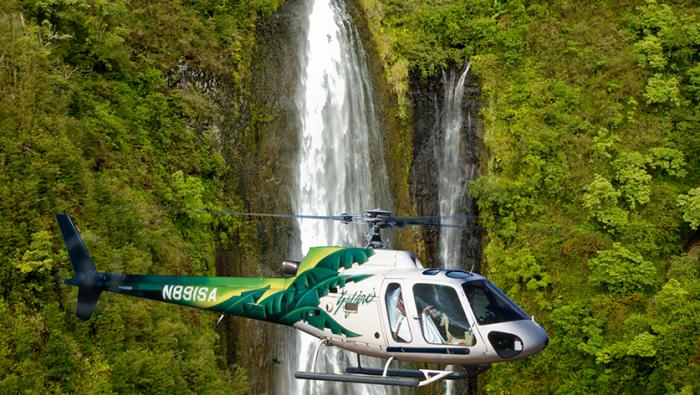
Federal auditors will examine whether helicopter tour operators are flying sightseeing trips under an “aerial photography” loophole that the NTSB said lets them follow the same safety rules and standards as private recreational pilots. That will be a main focus in a new Department of Transportation Office of Inspector General review of the FAA’s oversight of commercial helicopter air tours.
Announced yesterday, the audit starts this month at FAA headquarters and at selected Flight Standards District Offices chosen based on a sample of helicopter tour operators.
Since 2008, at least 58 crashes—11 involving fatalities—of tour helicopters have occurred across the U.S. More recently, a Bell 206L4 LongRanger on a sightseeing tour went down in the Hudson River on April 10, 2025, killing all six onboard.
The Commercial Air Tour Aviation Rulemaking Committee found, in a report dated Nov. 22, 2025, that major operational and procedural requirements for commercial air tours sit across multiple rules that overlap and sometimes contradict one another. It is “unclear to what extent FAA is aware of operators exploiting this loophole or other exemptions,” wrote Marshall Jackson, assistant inspector general for aviation audits.
Reps. Robert Menendez, Jerrold Nadler, Ed Case, Dan Goldman, Frank Pallone Jr., Jill Tokuda, and Nydia Velázquez requested the review on Oct. 16, 2025; the inspector general will also assess the FAA’s awareness of existing air-tour operations.
|
More details are emerging in the investigation of the fatal crash of a Bombardier Learjet 60 on Sunday in Palm Beach County, Florida. During the final onsite media briefing yesterday, NTSB member Thomas Chapman confirmed that the twinjet’s left elevator had separated from the aircraft before impact; the component was found broken into three pieces scattered miles from the main crash site. He added, “Weather is certainly a key focus of the investigation.”
It is still unclear at which point the tail-mounted control surface detached. Investigators will attempt to determine whether the elevator detachment caused the loss of control that led to the crash, or if it was torn off when the twinjet went into an overspeed condition—per radio calls by copilot Nathalia Filgueiras—as its descent rate exceeded 30,000 fpm.
Due to the heavy rain in the area, NTSB investigators have not been able to thoroughly examine the water-filled impact crater. But Chapman noted that water removal will begin today, allowing initial access to the main crash site.
According to the FAA Airman database, pilot Jeffrey Gregory held an airline transport pilot certificate with an unrestricted Learjet 60 type rating. Filgueiras held an FAA commercial pilot certificate with a Learjet 60 type rating “subject to pilot-in-command (PIC) limitations,” meaning she needed to be paired with a fully type-rated PIC such as Gregory.
|
An undisclosed customer has commissioned Greenpoint Technologies to complete the cabin interiors of a pair of Boeing BBJ 787-8 widebody bizliners. The company, which is now working with the clients’ interior designers to specify interior details, will be responsible for all engineering, manufacturing, installation, and certification of the cabins.
This latest contract follows an interior completion agreement for a 787-9 inked by the company earlier this year. Greenpoint, part of the French Safran group, is headquartered in the Seattle area near Boeing Commercial Airplanes’ main assembly lines, and its modification center is in Moses Lake, Washington.
On October 20, the General Authority of Civil Aviation of Saudi Arabia—where several BBJ customers are based—issued Greenpoint with a Part 145 repair station certificate. The approval covering maintenance and completions work followed an inspection of the Moses Lake facility.
“It is an honor to be selected for this important program,” said Greenpoint Technologies CEO Klaus Koester. “This contract reflects the confidence our clients place in our team to deliver highly complex aircraft interiors with quality, precision, and consistency.”
|
Aviation fuel pricing in the U.S. climbed again in October, marking the fourth consecutive month of increases, according to the latest report from iFlightPlanner.
The price of full-service jet-A rose by 30 cents last month, reaching a national average of $8.66 a gallon, up 3.6% from September and more than a dollar higher per gallon since June, it said. Alaska and Hawaii had the highest prices at nearly $10 per gallon. In the contiguous 48 states, the average jet-A per-gallon price reached $8.60, up 29 cents (3.5%), with prices highest in New England ($9.11) and the Eastern region ($9.03).
For avgas, the national average for full-service 100LL in October was $7.85 per gallon, a 10-cent increase from September. The per-gallon price was more than $8 in the Eastern, New England, Northwest Mountain, and Western-Pacific regions, while in Hawaii and Alaska it climbed to $12.35 and $11.25, respectively. Month over month, self-service 100LL rose by 15 cents to an average of $6.82 per gallon.
The iFlightPlanner data was compiled from pricing at more than 3,300 FBOs and fuel service providers across the U.S.
|
Sponsor Content: DAS Aviation
An extensive landing gear parts inventory means fewer delays and more solutions. See how DAS Aviation helps keep maintenance moving.
|
Speaking today during the Greater Washington Business Aviation Association 2026 Safety Day, Warren Randolph—acting director of the office of aviation safety and chief data officer for the NTSB—noted a key lesson learned from the spate of accidents occurring during the 1990s, when they were almost becoming normalized. “We made a determination that we have to come together,” he said during a fireside chat with GWBAA v-p Vincent Mickens.
This effort requires trust, Randolph said. Critical to building that trust and enabling the government/industry model to provide benefits are information protections. “We needed protection so that organizations could feel that they would not be violated or there would not be enforcement action.”
Randolph pointed to efforts to that end, including FAA advisory circulars and the Part 193 rulemaking. With trust, he added, “We’re continuing to evolve with that” and said more can be done around information protection.
He also noted the agency’s efforts to incorporate AI. “We have been working very diligently and cautiously,” he said. “We’re a safety organization, so we’re naturally risk averse.” But the agency is looking at how AI could be introduced in its workflows, Randolph continued.
The NTSB is in the early stages of implementing AI where it makes sense, but Randolph added that a human will always be in the loop whenever it is used.
|
Texas-based Part 145 repair station SkyWay Group has received FAA parts manufacturer approval (PMA) for its SkyFlush lavatory upgrade kits for the Cessna CitationJet/CJ1, CJ2, and CJ3-series business jets. The modification—which costs about $42,000 for the hardware and $5,000 for installation—makes the lavatory on these light twinjets externally serviceable.
According to the Uvalde, Texas-based company, the FAA authorization covers both the engineering design and the production quality system used to manufacture and assemble kits.
The SkyFlush system was designed to provide a more sanitary waste disposal alternative to the original factory lavatory configuration, which required removal of black water tanks through the aircraft cabin. It replaces the existing OEM toilet installation with a flushing lavatory system that stores waste for later pumping overboard through an externally accessible service panel in the aft wing-fuselage fairing, compatible with an industry-standard 4-inch drain fitting.
“Receiving FAA PMA approval for SkyFlush represents an important milestone for SkyWay and Citation CJ-series operators,” said company CEO Mark Huffstutler. “Our goal is to deliver a practical, well-engineered lavatory solution backed by our decades of aviation manufacturing experience and our commitment to quality.”
|
AMAC Aerospace has invested in modern nondestructive test (NDT) equipment to help aircraft owners identify the onset of corrosion and deal with the value-depleting problem effectively before it becomes a larger problem.
According to AMAC’s specialists, the aircraft operating environment is a better indicator of corrosion risk than age. The damage, which mainly affects metal parts but can also degrade fiber composites, is more prevalent when aircraft are based near saltwater shorelines, in environments that are humid, or have high levels of pollution from heavy industry. The close proximity of dissimilar metals or materials can also significantly increase the occurrence of corrosion.
AMAC, which has its main MRO facility in Basel, Switzerland, is part of a changing approach to corrosion control that is moving from periodic visual inspections and manual treatment toward a preventative approach based on early detection, better surface protection, and data-driven predictive maintenance. Preventative measures now include using surface primer paints and topcoats, corrosion inhibitors, better drainage control around the airframe, and use of surface treatments, sealants, and chemical conversion coatings.
The company’s inspectors are now using digital imaging based on artificial intelligence that more accurately compares current inspections with previous images of the airframe surface. Besides the standard single-probe eddy current tests, the company is increasingly deploying arrays that can cover larger areas and map potential issues accurately.
|
NBAA honored U.S. House Transportation and Infrastructure Committee Chairman Sam Graves (R-Missouri) and its recently retired senior v-p, Doug Carr, during the recent NBAA-BACE show.
The association bestowed its Silk Scarf Award on Graves to recognize his “extraordinary leadership and steadfast commitment to business aviation.” Graves is retiring this year after serving in Congress since 2001.
During his time, he has been a staunch general aviation advocate, helping to create and then co-chairing the General Aviation Caucus. He was also the architect of the first standalone general aviation title in an FAA reauthorization bill. “Chairman Graves has been among the most effective and consequential legislators in the history of the House Transportation and Infrastructure Committee,” said NBAA interim COO Dan Hubbard.
Separately, NBAA recognized Carr with the Pillar of the Association Award. Carr retired in August after 28 years with NBAA.
NBAA credited Carr for helping to strengthen business aviation safety, preserve access to airspace and airports, and support operators flying internationally. “Doug’s work is woven into the fabric of NBAA,” Hubbard said. “Doug brought the expertise and persistence needed to find a workable path forward.” Over the years, Carr spearheaded both domestic and international issues, serving at the forefront of interactions with safety and security agencies both in the U.S. and abroad.
|
RECENT AIRWORTHINESS DIRECTIVES
- AD NUMBER: EASA 2026-0212
- MFTR: Daher Aircraft
- MODEL(S): TBM 700, 700C, 850, 900, 910, 930, 940, 960, and 980
- Requires a one-time inspection of the main landing gear barrel for cracks and, depending on findings, replacement. Prompted by reports of cracks on gear barrels. A subsequent investigation revealed a manufacturing nonconformity in the area of the forging joint line of the barrel, installed in the left- and/or right-hand main landing gear. If not detected and corrected, this condition could lead to fatigue cracks in the gear barrel, which could result in a collapsed main landing gear during takeoffs or landings, as well as possibly reduced aircraft structural integrity.
| PUBLISHED: November 4, 2026 |
EFFECTIVE: November 18, 2026 |
|
 |
|
AINalerts News Tips/Feedback:
News tips may be sent anonymously, but feedback must
include name and contact info (we will withhold name on request). We reserve the
right to edit correspondence for length, clarity, and grammar. Send feedback or
news tips to AINalerts editor Chad Trautvetter.
|
AINalerts is a publication of AIN Media Group, 214 Franklin Avenue, Midland Park, New Jersey. Copyright 2026. All rights reserved.
Reproduction in whole or in part without permission is strictly prohibited.
|
|










 View email in browser.
 Advertise
 Manage subscription preferences


