
Bombardier yesterday opened a maintenance technician training center in Wichita just weeks after upgrading a wheel and tire shop, marking a combined $50 million investment at the site. Kansas Gov. Laura Kelly, Lt. Gov. David Toland, Bombardier senior leaders, and industry stakeholders gathered to christen the new facility.
The North American Learning Center will initially help standardize training for new-hire maintenance technicians at Bombardier’s 10 U.S. service centers. Bombardier told AIN that courses for advanced maintenance training and interior removal and installation are likely to be added later at the center. The company expects roughly 250 new-hires to go through two-week courses there over the next year.
Notably, the center houses a Global 5000 fuselage (from a retired flight-test airplane), raised on jack stands, that lets students work on an actual airplane without worrying about damaging a customer aircraft, the company said. It also has back shops where students can practice sheet metal work, safety wire twisting, and other maintenance tasks, in addition to computer learning classrooms where they can learn how to use digital aircraft maintenance manuals, order parts, and look up information such as airworthiness directives.
Meanwhile, the modernized wheel and tire shop will help to double throughput from 2,300 units last year to 5,000 this year. With a more efficient workflow and the addition of automated equipment, Bombardier believes the shop, at full ramp-up, will be able to service up to 15,000 wheels and tires annually.
|
In 2008, Wachovia announced it was closing its flight department in 60 days. For the people who worked there, those 60 days became a countdown.
Jamie Buff, who worked in maintenance, had just built a house, and his children were in school. He had come to Wachovia after serving in the Air Force. He considered Wachovia his dream job. Gabe Langenderfer, a pilot, had a wife and a 2-year-old at home. His family had relocated twice in 12 months.
The day the closure was announced, my colleague and I were there to provide outplacement support. That’s how I met Jamie and Gabe. At the time, Wachovia’s was among the first of many flight departments that would close or downsize during the recession. None of us knew how hard the next few years would be for business aviation.
Jamie remembers the news the way many people who have lost a job will understand. “It just takes the wind out of you,” he told me.
How an employer handles those difficult days matters, too. Wachovia gave its aviation employees notice, severance, information, and professional support.
Nearly two decades later, I can see pieces of that experience in the way they lead. They lost jobs they loved in 2008. But when I look at the leaders they are today, I also see what they carried with them.
|
Some charter customers focus too intently on the price of a flight without sufficiently considering the many factors that feed into the success of a trip, according to broker Chapman Freeborn. At the recent Corporate Jet Investor conference in Dubai, Steffen Fries, advisor to the company’s CEO, warned that this attitude is especially prevalent in the Middle East, where he said clients will haggle over a quote difference as small as $500 without understanding what separates one proposal from another.
“In many markets, someone can begin selling a $100,000 flight without first demonstrating that they understand the operational and regulatory requirements behind it,” Fries said. “That does not mean every small or new broker lacks expertise. There are excellent brokers of all sizes. The problem arises when limited experience is combined with promises that an operator cannot fulfill.”
In Chapman Freeborn’s view, excessive focus on a charter price can blind customers to important details, such as whether an operator has the right permits and whether the airports proposed for a trip are suitable. The group said it is also concerned that price pressure can increase the prevalence of gray-market charters in which an operator is not legally qualified to fly for hire. Fries said this risk is especially high in the Middle East, where many privately owned jets operate.
|
Indra Group USA’s 118,000-sq-ft facility in Olathe, Kansas, is now fully operational, with production underway on radars and Nexcom VHF/UHF air-to-ground digital radios that will support the FAA’s effort to overhaul the nation’s air traffic control system.
In June, the group announced that the FAA had commissioned the first new Indra-supplied secondary radar under a contract awarded early this year. The FAA had awarded contracts to both Indra and RTX for installation of up to 612 radars by June 2028. Under the initial phase of that program, Indra is supplying 185 primary and secondary radars. That contract followed an earlier one for Indra to provide as many as 46,000 new radios and associated ground support.
To support these orders, Indra has been ramping up production and held a ribbon-cutting in April for the $50 million Olathe facility. The company recently hosted U.S. Secretary of Transportation Sean Duffy and U.S. Sen. Roger Marshall (R-Kansas), along with FAA COO Frank McIntosh and Olathe Mayor John Bacon, on a tour to showcase that it has reached full operations.
In addition to the air-to-ground digital radios and radar, the facility will produce more than 1,500 ADS-B radios, as well as MP-Tacan (man-portable tactical air navigation) systems for the U.S. Air Force. The facility complements Indra’s 40,000-sq-ft facility in nearby Overland Park, Kansas.
|
Sponsor Content: Thornton Aviation
Thornton Aviation has been the backbone of their maintenance and operational support for both the GIV and Hawker 800XP.
|
Next week, PrivatPort will open new Mexican FBOs at Cancún International Airport (MMUN) and Tulum’s Felipe Carrillo Puerto International Airport (MMTL), serving tourist resorts on the Riviera Maya coast. The two sites are among the new FBOs that the group—a newly spun-off business aviation subsidiary of airline ground handler Swissport—is adding to a network that includes private aviation support at another 84 airports worldwide.
Desigen Vythilingum, PrivatPort’s newly appointed chief commercial officer, told AIN that the company is seeking to convince operators to try the high level of care it says it can deliver through a more focused approach to business aviation. The group also named Aldo Salzillo chief operating officer this week.
The other FBOs are in Geneva; Auckland and Hawke’s Bay in New Zealand; and the Moroccan cities of Casablanca, Rabat, Marrakech, and Tangier. Many PrivatPort teams formerly operated under the Swissport Executive brand.
According to Vythilingum, there is plenty of opportunity for “granular, organic growth” at the locations now under the PrivatPort umbrella. “Many of our [Swissport] employees had significant passenger service experience and wanted to get into providing this level of service,” he commented.
At the heart of the network is PrivatPort’s new flight operations control center in Dubai. The facility provides operators with 24/7 global support, and a single point of contact can arrange all aspects of service wherever needed.
|
Business aircraft operators can sample new Airflow-powered agents and consolidated capabilities at the Jeppesen ForeFlight NBAA-BACE exhibit. The new AI-powered Airflow agents and capabilities work in the company’s Dispatch platform, and new ForeFlight Mobile features are also available, bringing together safety management, flight tracking, paperless cockpit operations, runway performance, fuel, and aircraft privacy tools.
The move to consolidate these various functions is designed to help business aircraft operators simplify their operations, by accessing one platform instead of using different products from a variety of companies.
“Business aviation operators are expected to run like airlines, often with a fraction of the staff,” said Jeppesen ForeFlight CEO Brad Surak. “To do that effectively, their tools need to work together. We’re bringing the entire operation into one connected ecosystem, from the initial trip request through the final safety report.”
The new Airflow AI agents, now part of ForeFlight Dispatch, include Trip Feasibility and Ops Briefing. Before launching a mission, Trip Feasibility checks for potential issues such as sanctions, permits, notams, weather, and airport restrictions. The Ops Briefing agent helps ensure a shared operational picture by consolidating notams and current and forecast weather.
Jeppesen ForeFlight has added privacy ICAO address support so eligible operators can file flight plans using an alternate temporary ICAO address. This helps mask ownership information that is usually available via public flight tracking to ensure privacy for the aircraft’s owner.
|
Sweden’s Saab has unveiled the first GlobalEye based on the Bombardier Global 6000, set for delivery to the Swedish air force next year. Designated the S106 in national use, the airborne early warning and control (AEW&C) aircraft is on an accelerated path to Swedish service.
On October 15, Saab rolled out the first of three aircraft ordered by Swedish defense procurement agency FMV from its headquarters and airframe conversion site in Linköping. Testing, verification, and a flight-test campaign are set to follow. The air force confirmed to AIN that it expects the first flight later this year.
FMV described the occasion as “an important milestone in the introduction of a new airborne reconnaissance and command capability that will strengthen Sweden’s contribution to NATO’s common defense.” Sweden is set to become the first NATO member to operate the type. Although the aircraft will initially operate with an interim mission system fit, it will later be upgraded to full specification.
Sweden became GlobalEye’s second customer in June 2022, after the launch operator, the UAE, when FMV signed an initial contract for two. FMV finalized an order for a third example in June 2024. The first two are set for delivery in 2027, with the third aircraft to be delivered by 2029, replacing the air force’s aging Saab 340 regional turboprop-based ASC 890 AEW&Cs.
|
Aircraft scheduling software provider Floating Fleet AI (FFAI) is debuting an agentic scheduling workflow system next week at NBAA-BACE 2026. It claims the workflow helps teams evaluate scheduling options over a chosen planning window, giving them a faster way to balance service, cost, and capacity as air charter demand, operating costs, and schedule disruption put increasing pressure on fleet performance.
The White Plains, New York-based company uses agentic technology—autonomous or semiautonomous artificial intelligence (AI) systems that can plan, reason, decide, and execute multistep workflows to achieve high-level goals with minimal human supervision.
FFAI’s optimization agents generate and compare schedule scenarios and present the trade-offs side by side so schedulers can decide quickly. Unlike general-purpose AI assistants, which can occasionally offer options that break operational rules, FFAI’s optimization agents treat real-world constraints as hard rules, so every scenario presented is valid, and they show why each change is proposed.
Operators can see the schedule across aircraft and crew, understand the rationale and projected impact of proposed changes, and evaluate options with greater transparency.
“Operators are balancing cost, customer commitments, and aircraft availability in an increasingly dynamic environment,” said FFAI founder and CEO Roger Zhan. “Agentic scheduling gives teams the ability to evaluate more possibilities in less time and to see the operational and financial implications of each option.”
|
Top Stories This Week on AINonline
|
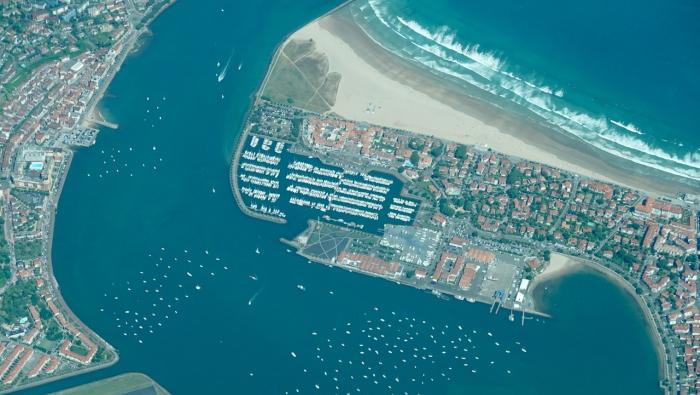
Photo of the Week
Life is a beach. Textron Aviation pilot Peter Herr provides a glimpse of San Sebastián, Spain, from the view of a Cessna Grand Caravan EX. He asks of the Basque Country coastal city in northern Spain: “Play area: planes, boats, beach; what more is needed?” That’s a great question that, in our opinion, merits some in-depth on-site investigation by the AIN staff before we report the answer. ¿Verdad que sí? Thanks for sharing, Peter!
Keep them coming. If you’d like to submit an entry for Photo of the Week, email a high-resolution horizontal image (at least 2000 x 1200 pixels), along with your name, contact information, social media names, and info about it (including brief description, location, etc.) to photos@ainonline.com. Tail numbers can be removed upon request. Those submitting photos give AIN implied consent to publish them in its publications and social media channels.
|
AINalerts News Tips/Feedback:
News tips may be sent anonymously, but feedback must
include name and contact info (we will withhold name on request). We reserve the
right to edit correspondence for length, clarity, and grammar. Send feedback or
news tips to AINalerts editor Chad Trautvetter.
|
AINalerts is a publication of AIN Media Group, 214 Franklin Avenue, Midland Park, New Jersey. Copyright 2026. All rights reserved.
Reproduction in whole or in part without permission is strictly prohibited.
|
|









-Oct-16-2026-05-02-17-7233-PM.jpg?upscale=true&width=1396&upscale=true&name=Aircraft%20Post%20Business%20Market%20Recap%20Banner%20(v3)-Oct-16-2026-05-02-17-7233-PM.jpg)

 View email in browser.
 Advertise
 Manage subscription preferences


